Introduction
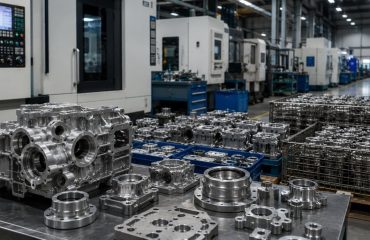
Short-run production covers the manufacture of functional, end-use parts in quantities too small to justify high-volume tooling, commonly between 50 and 500 units. It is among the most difficult volume bands to source in Australia, and the reason is that no single process serves the whole range.
The enquiries we receive illustrate the problem. A hardware company requires 300 enclosures for a first production batch. A mining services business needs 80 replacement housings for equipment the original manufacturer no longer supports. A distributor must supply 150 units to satisfy a tender before committing capital to high-volume tooling. None of these are prototypes, and each one has a different correct answer.
The common assumption is that 3D printing is the default solution at these volumes. In our experience it usually is not. Additive manufacturing is generally most economical up to around 20 units. Between approximately 20 and 200 units, vacuum casting is often the more cost-effective route. Above that, injection moulding typically becomes the better investment.
Those figures are starting points, not rules. Part complexity and manufacturability frequently override them. This article sets out how we assess a short-run enquiry, what each process costs to run, where the thresholds sit and why they move.
Defining Short-Run Production
Short-run production, also described as low-volume manufacturing or bridge production, differs from prototyping in three commercially significant respects.
- The parts are deployed or sold rather than evaluated. Dimensional accuracy and mechanical performance must hold across the entire batch, not only on selected units.
- Consistency is the deliverable. Unit 200 must match unit 1 within the specified tolerance. This is a question of process control rather than raw manufacturing capability.
- The batch carries a schedule. Prototype timelines are flexible. Production batches sit inside customer commitments and launch dates.
Bridge production describes the same activity with a defined end point: manufacturing by a lower-tooling method while high-volume tooling is being cut, so that product availability is not governed by tooling lead time.
Process Selection: Volume Is Only the Starting Point
A quantity on its own is not enough to quote against. Our recommendation is based on five factors considered together.
- Production volume. The dominant factor in most cases, and the one customers usually lead with.
- Part complexity. Internal channels, thin walls, lattice structures, undercuts and consolidated assemblies can place a part beyond what conventional methods can produce at any volume.
- Manufacturability by conventional means. A design may be technically mouldable but require tooling so complex that the economics no longer hold.
- Lead time. A tool that takes six weeks to cut is not a solution to a four-week deadline, whatever the unit price.
- Total cost. Not unit price in isolation, but tooling, material, labour, finishing and freight across the whole batch.
The sections below give the volume bands we work to. Read them as defaults that complexity can override.

Up to approximately 20 units: additive manufacturing
At these quantities there is no tooling cost to amortise, so additive processes are usually the most economical and the fastest route to finished parts.
- FDM suits functional parts with straightforward geometry in engineering-grade materials such as ABS, ASA, polycarbonate and carbon-fibre nylon.
- SLA is appropriate where surface finish or fine feature resolution governs, such as housings intended for painting or components carrying small engraved detail.
- SLS and MJF produce durable nylon parts with consistent mechanical properties and no support structures to remove, which makes them well suited to functional batches at the upper end of this range.
Approximately 20 to 200 units: vacuum casting
This is the band most often specified incorrectly, because it is where additive manufacturing stops being the cheapest option and many suppliers do not offer the alternative.
Vacuum casting uses a silicone tool produced from a printed master pattern. The tool is inexpensive relative to steel tooling and quick to make, and it yields parts in polyurethane resins with near-moulded surface quality and a wide range of mechanical and optical properties, including rigid, flexible, transparent and rubber-like grades.
For appearance-critical batches and for functional parts in this range, vacuum casting generally delivers better unit economics and a better surface finish than printing every unit individually. The trade-off is that a silicone tool has a finite life, typically producing around 20 to 50 parts before replacement, so larger quantities require multiple tools.
Above approximately 200 units: injection moulding
Once quantities move beyond a few hundred units and the part is genuinely mouldable, hard tooling becomes the better investment. The tool carries an upfront cost and a lead time of several weeks, but unit cost then drops well below any low-tooling alternative and remains stable across production life.
The assessment at this threshold is not purely arithmetic. It depends on whether the design is settled, whether the product has a life beyond the current batch, and whether the geometry can be moulded without excessive tool complexity.
When complexity overrides volume
Volume thresholds assume the part can be made by conventional means. Frequently it cannot.
Where a design cannot be practically produced by vacuum casting, injection moulding or CNC machining, additive manufacturing remains the preferred process at quantities well above 200 units. Typical cases include:
- Internal channels or cavities that no tool can form or eject
- Consolidated assemblies replacing multiple moulded components
- Lattice, honeycomb or topology-optimised structures
- Geometry requiring undercuts that would demand prohibitively complex tooling
- Parts in materials available only through additive processes
In these cases the correct comparison is not additive against moulding, but additive against redesigning the part so it can be moulded. That is a decision about product performance, not only unit cost, and it is worth taking before tooling is commissioned.
Metal components
DMLS and SLM produce end-use metal parts in stainless steel, aluminium, titanium and Inconel. Metal tooling costs are high enough that additive manufacturing remains economical at volumes where polymer parts would already have moved to casting or moulding. CNC machining is the main alternative and is frequently faster and cheaper for simple turned or milled geometry.
This capability continues to attract national investment. CSIRO’s Lab22 describes metallic additive manufacturing as the fastest growing manufacturing technology globally, with the Australian market projected to reach $10 billion by 2030.
Upload Your 3D File & Get a Quote · Speak to Our Team
Cost Structure Compared
The relevant comparison is total cost to place finished parts in hand, not unit price in isolation.
| Additive manufacturing | Vacuum casting | Injection moulding | |
| Tooling requirement | None | Silicone tool from a printed master | Hard tool, aluminium or steel |
| Upfront tooling cost | None | Low | Several thousand to tens of thousands of dollars |
| Lead time to first part | Days | Around one to two weeks | Typically 4 to 8 weeks |
| Economical quantity | Up to approximately 20 units | Approximately 20 to 200 units | Above approximately 200 units |
| Tool life | Not applicable | Approximately 20 to 50 parts per tool | Hundreds of thousands of cycles |
| Cost of a design change | File revision only | New silicone tool | Tool modification or replacement |
| Surface finish | Process dependent, may require finishing | Near-moulded | Moulded |
| Geometric freedom | Highest | Moderate, limited by demoulding | Limited by tool design and ejection |
The thresholds shift with part size, geometry and material. A large part consumes machine time and material quickly, which lowers the point at which casting becomes competitive. A small, simple part may remain economical to print somewhat beyond 20 units.
Because Zeal 3D operates all three processes alongside CNC machining, recommending tooling carries no commercial disadvantage for us. A provider offering additive processes alone has limited incentive to identify the point at which additive manufacturing is no longer the economical choice.
Process Controls for Batch Production
The transition from single parts to production quantities introduces requirements that do not apply to prototype work.
- Nesting efficiency determines unit price in additive work. Powder-bed processes build a complete bed irrespective of how many parts occupy it. Components that pack efficiently share that cost across the batch; those that use bed space poorly absorb it individually. Minor geometry revisions can materially reduce unit cost, and we flag these at quotation.
- Build orientation must be fixed and documented. Every unit in an additive batch is built in the same orientation. Variation in orientation produces variation in mechanical properties and dimensional accuracy across the run. The decision is made once and locked for the duration of the batch.
- Tool life must be planned in cast batches. A silicone tool degrades with each pull. For a 150-unit run we plan tool replacement into the schedule and the quotation rather than discovering the limit partway through production.
- Post-processing governs the schedule. Manufacturing is the predictable stage of a production run; finishing is not. Depowdering, support removal, demoulding, trimming, bead blasting, painting and inspection are labour-dependent operations that scale linearly with quantity, whereas machine time does not. Most cost variance in a short-run quotation originates here.
- First article approval precedes full production. We manufacture and submit a first article, produced under the same parameters as the batch, for customer approval before committing the full quantity. Approval of a single unit requires one day. Identifying a fit or tolerance issue at unit 200 compromises the batch.
- Critical dimensions must be specified in advance. Low-volume processes hold tolerance reliably, though not to machining standards on every feature. Where specific dimensions are critical, we either hold them within the primary process or machine them post-production. The approach is confirmed before manufacturing begins.
Material Selection for End-Use Parts
Short-run components are end-use parts, so material selection follows functional requirement rather than convenience or cost alone.
| Requirement | Typical specification |
| General functional housings | Nylon 12 (SLS or MJF), ABS, PETG |
| UV and weather exposure | ASA, UV-stable cast polyurethane |
| Impact resistance | Polycarbonate |
| Strength-to-weight performance | Carbon-fibre or glass-filled nylon |
| Flexibility, seals and grommets | TPU, rubber-like cast polyurethane |
| Optical clarity | Cast transparent polyurethane, SLA resins |
| Elevated temperature and chemical resistance | PEEK, ULTEM (PEI) |
| Appearance-critical batches | Cast polyurethane, SLA resins |
| End-use metal components | Stainless steel, aluminium, titanium, Inconel |
Of the 45-plus materials we hold, the engineering grades are the relevant range for production work. A component intended for several years of service should not be specified in the material that was appropriate for the prototype.
The Australian Manufacturing Context
Low-volume capability has become a supply chain consideration as much as a cost consideration. Offshore tooling requires committing capital to a design before market validation, accepting extended lead times, and carrying freight and customs exposure.
Policy direction reflects this. The Department of Industry, Science and Resources has identified domestic manufacturing capability as a national priority, and the National Reconstruction Fund Corporation is investing directly in advanced manufacturing capacity. Domestic low-volume capability is what allows a business to act on that direction without first funding a hard tool.
The practical effect is a revised sequence for manufacturers: validate a product at 200 units, gather performance data from field use, revise the design, and commit to hard tooling only once the design is settled.
Short-Run Production at Zeal 3D
Zeal 3D has supplied prototyping and production parts to Australian industry for two decades, working with organisations including CSIRO, BHP, Thales, Monash University, RMIT and state government bodies. Short-run production sits at the centre of that work, because it is the volume band where process selection, rather than machine availability, determines whether a project is commercially viable.
Nine processes under one supplier
The capability that matters at this volume is breadth. We operate FDM, SLA, SLS, MJF, PolyJet and metal DMLS/SLM alongside CNC machining, vacuum casting and injection moulding.
The practical consequence is that a quotation is not constrained by the equipment on our floor. A 15-unit batch might be best served by SLS, a 120-unit batch by vacuum casting, and a 2,000-unit batch by a tool we cut ourselves. A provider operating a single process must fit every enquiry to that process. We are under no such constraint.
This also removes the most common friction in scaling a product: changing supplier when volume changes. Design data, material history and tolerance expectations stay with one manufacturer through prototype, bridge production and tooled manufacture.
Material range for end-use parts
We hold more than 45 3d printing materials spanning standard polymers, engineering grades, reinforced composites, high-performance thermoplastics, cast polyurethanes and metal powders. For short-run work, the engineering grades account for the majority of specifications: nylon 12, polycarbonate, ASA, TPU, carbon-fibre and glass-filled nylon, PEEK and ULTEM, cast polyurethane resins, and stainless steel, aluminium, titanium and Inconel in metal.
Material selection is made against the service environment and the expected life of the part, not against what is quickest to run.
How a production batch is managed
Our approach to short-run work differs from single-part manufacturing in four respects.
- The run is quoted, not the part. Tooling where required, batch scheduling and post-processing labour are costed across the full quantity, which is why 200 units does not cost 200 times a single unit.
- A first article is approved before production. One unit, manufactured under production parameters, is submitted for sign-off before the batch is committed.
- Process parameters are locked for the batch. Orientation or tool configuration, material lot and post-processing sequence are fixed once approved, ensuring units remain comparable throughout the run.
- Staged delivery is available. For larger quantities we can dispatch in tranches, allowing downstream assembly to begin before the final unit is produced.
Commercial terms suited to low volume
- No minimum order quantity. A single component and a batch of 500 are quoted through the same process, which is what makes iterative production viable rather than a series of separate negotiations.
- Process recommendation included at quotation. Every quote carries a recommendation on process and material, at no cost, including recommendations that move work away from additive manufacturing.
- National delivery. Parts are manufactured in Australia and delivered to every state and territory.
- Engineering support on the file. Where a geometry is inefficient to nest, difficult to demould, carries unnecessary support requirements, or specifies a material heavier than the application needs, we identify it before the run rather than after.
As a manufacturing partner operating multiple processes rather than a single technology, we quote each short run against the process appropriate to the part. Upload your file with your target quantity for a process recommendation alongside pricing, with delivery throughout Australia.

Frequently Asked Questions
Q1. What quantity constitutes short-run production?
Ans – Broadly 50 to 500 units of an end-use part. Below 50 units the work resembles prototyping. Above several thousand units, hard tooling is generally the economical route for a mouldable component.
Q2. Is 3D printing the cheapest option for 200 parts?
Ans – Usually not. Additive manufacturing is generally most economical up to around 20 units. Between approximately 20 and 200 units, vacuum casting is often more cost-effective, and above that, injection moulding typically wins. The exception is a part too complex to produce by those methods, where additive remains preferable at any quantity.
Q3. What is vacuum casting and when should it be used?
Ans – Vacuum casting produces parts by pouring polyurethane resin into a silicone tool made from a printed master pattern. It suits quantities of roughly 20 to 200 units, delivers near-moulded surface finish, and offers rigid, flexible, transparent and rubber-like material options. Each silicone tool produces approximately 20 to 50 parts before replacement.
Q4. How consistent are parts across a production run?
Ans – Consistent where the process is controlled. Fixed build orientation or tool configuration, a locked material lot and a documented post-processing sequence deliver batch-to-batch repeatability. In additive work, MJF performs particularly well, as mechanical properties vary minimally across the build.
Q5. Can a short run transition to injection moulding later?
Ans – Yes, and it is frequently the appropriate sequence. This is bridge production: manufacturing by a lower-tooling method while the hard tool is cut, or while the design is validated in the market. All processes are available in house.
Q6. What is the lead time for a run of 200 parts?
Ans – This depends on the process selected. Additive build time is measured in days. A silicone tool for vacuum casting typically takes one to two weeks before casting begins. Hard tooling runs four to eight weeks. Finishing and inspection labour usually governs the final schedule, and a delivery date is confirmed at quotation.
Q7. Is there a minimum order quantity for short-run production??
Ans – No. A single component and a batch of 500 are quoted through the same process.
Q8. Can short production runs be made in metal?
Ans – Yes, through DMLS and SLM in stainless steel, aluminium, titanium and Inconel. Given the cost of metal tooling, additive manufacturing remains economical at higher volumes in metal than in polymers. For simple turned or milled geometry, CNC machining is often the faster and less expensive route.
Upload Your 3D File & Get a Quote · Speak to Our Team
Conclusion
The 50 to 500 unit band is not a gap in Australian manufacturing capability. It is a gap in how manufacturing is usually sold, because a supplier operating one process will recommend that process regardless of quantity.
Five questions determine the correct approach. How many units are required? Is the geometry producible by conventional methods? Is the design settled or still subject to revision? What is the deadline? And will the product outlive the current batch?
Answered together, those questions usually point clearly to one process. Answered by volume alone, they frequently point to the wrong one.
Provide the component and the target quantity, and we will identify the appropriate process, including where that process is not additive.